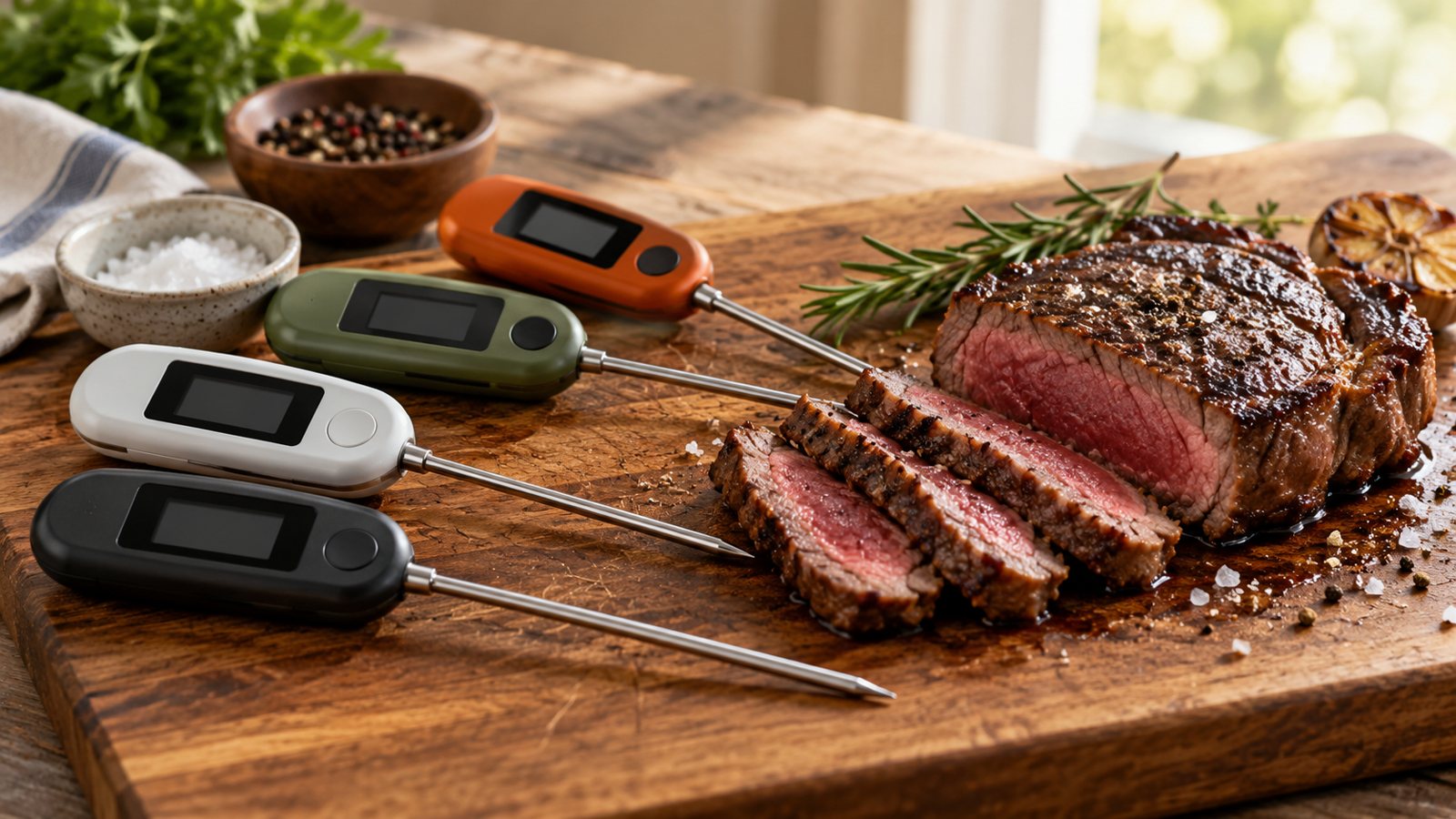
Food Thermometer Types: Thermocouple, Thermistor, Dial and Wireless
Which thermometer fits which job, using USDA FSIS speed and placement figures.
We may earn a commission when you buy through links on this page, at no extra cost to you. This does not change which products we cover. How we make money.
| Type | Speed (USDA FSIS) | Placement | Stays in food? |
|---|---|---|---|
| Thermocouple | 2 to 5 seconds | 1/4 in or deeper | No |
| Thermistor | 10 seconds | At least 1/2 in | No |
| Oven cord | 10 seconds | At least 1/2 in | Yes |
| Wireless or smart | Live readings | At least 1 in in the thickest part | Yes |
| Instant-read bimetal dial | 15 to 20 seconds | 2 to 2 1/2 in | No |
| Oven-safe bimetal dial | 1 to 2 minutes | 2 to 2 1/2 in | Yes |
Which to buy
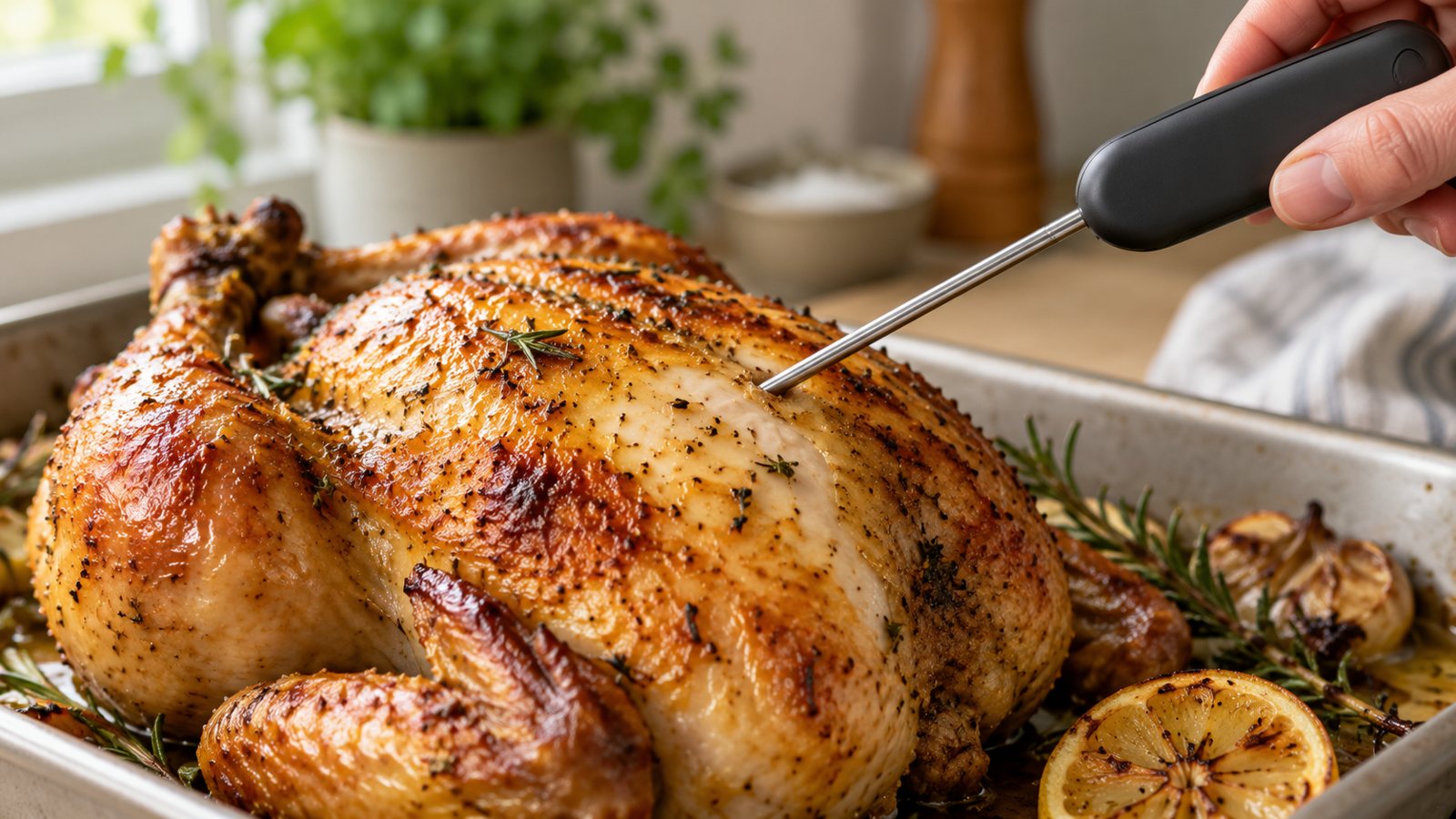
- For thin foods like burgers and chops, use a thermocouple or thermistor; insert from the side. See our best instant-read thermometers.
- For roasts and smoking, a leave-in probe watches the whole cook. See our best wireless meat thermometers.
- Dial thermometers average along 2 to 2 1/2 inches of stem, so FSIS says they are not appropriate for foods under 3 inches thick.
Frequently asked questions
Which type is fastest?
Thermocouples, which USDA FSIS says read in 2 to 5 seconds.
Can I leave a dial thermometer in the oven?
Only an oven-safe bimetal model. Instant-read types are not designed to stay in food while it cooks.